
Introduction
As Uttar Pradesh prepares for the 2027 Assembly elections, digital communication, accurate information sharing, and voter awareness remain important topics for political organizations, public representatives, and election-related service providers. Organizations often use digital channels to share announcements, respond to public queries, and communicate election procedures.
Searches for the WhatsApp Business API for UP Election 2027 reflect interest in messaging automation, bulk communication, and digital outreach. However, before choosing a platform, it is essential to understand the rules that apply to political communication.
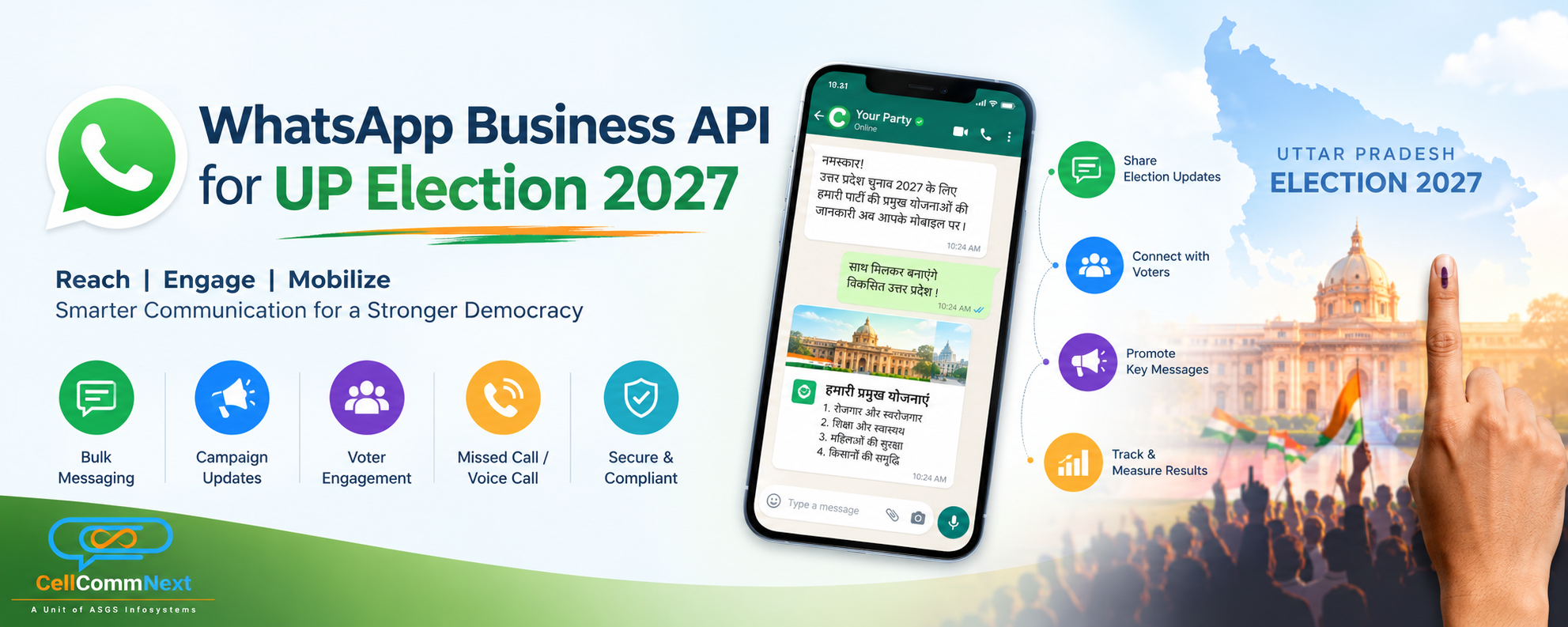
WhatsApp’s current Business Messaging Policy explicitly prohibits political parties, politicians, candidates, political campaigns, and businesses providing political campaigning services from using the WhatsApp Business Platform (API). Therefore, these organizations should not treat the WhatsApp Business API as an available tool for election campaigning. Read the official WhatsApp Business Messaging Policy.
Businesses and organizations researching WhatsApp marketing for political campaigns, political communication services in Uttar Pradesh, and election messaging should first verify platform eligibility and applicable laws. Alternative communication channels, including compliant bulk SMS and voice call services, may be worth evaluating where permitted.
This guide explains WhatsApp Business API capabilities, its policy limitations for election campaigns, alternative communication methods, and important compliance considerations for the 2027 Uttar Pradesh elections.
What Is the WhatsApp Business API?
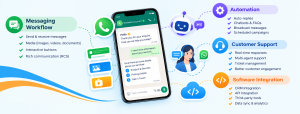
The WhatsApp Business Platform, commonly called the WhatsApp Business API, enables eligible organizations to integrate WhatsApp messaging with software, customer service systems, and supported business applications.
For permitted business use cases, its capabilities can include:
- Automated messaging: Send approved notifications for eligible business purposes.
- Message templates: Use approved templates to initiate conversations according to platform rules.
- Customer support integration: Connect messaging with customer service systems.
- CRM integration: Organize eligible customer interactions and service records.
- Human agent handover: Transfer automated conversations to a human representative when needed.
- Message delivery management: Monitor supported messaging activity through an integrated platform.
These features are intended for eligible uses under WhatsApp’s policies. Their availability does not mean that political parties, candidates, or election campaigns can use the API.
Organizations planning digital communication for UP Election 2027 should check the latest official policies before selecting a messaging provider.
Can Political Campaigns Use the WhatsApp Business API for the UP Election 2027?
This is one of the most important questions for anyone researching the WhatsApp Business API for the UP Election.
According to WhatsApp’s Business Messaging Policy, political parties, politicians, political candidates, and political campaigns are prohibited from using the WhatsApp Business Platform. The policy also restricts businesses offering political campaigning services.
Consequently, a political organization should not purchase an API integration or campaign messaging package on the assumption that it can use the official WhatsApp Business Platform for election outreach.
Before launching any communication campaign, organizations should:
- Review the latest WhatsApp Business Messaging Policy.
- Confirm whether their organization and intended use case are eligible.
- Avoid unauthorized bulk messaging and automation.
- Verify applicable Election Commission of India requirements and other relevant laws.
- Choose communication channels that permit the intended use.
The policy can change, so organizations should review the official documentation again before the election period.
WhatsApp Business API Features: Understanding Their Intended Use
Although the API is not available for political messages on WhatsApp campaigns under the current policy, understanding its general capabilities helps organizations distinguish eligible business messaging from restricted election-related use.
1. Automated Messages
Eligible businesses can automate certain service notifications and customer interactions. For example, an e-commerce business may automate an order update or provide a response to a customer inquiry.
Automation should be designed around a permitted use case, with appropriate customer permissions and clear options for human assistance.
2. Approved Message Templates
The WhatsApp Business Platform requires approved message templates when initiating conversations outside the customer service window. Templates must follow WhatsApp’s rules and be used for their approved purposes.
Template approval does not override the prohibition on political campaign use.
3. CRM and Software Integration
For eligible businesses, API integration can connect messaging with customer relationship management systems, help desks, and other software.
This can help organize service requests, manage customer interactions, and maintain operational records.
4. Automated Customer Support
Businesses can use supported automation to handle common customer questions and route complex queries to human agents. Appropriate escalation options should remain available.
These capabilities are relevant to permitted customer service operations, not a way to bypass restrictions on political campaigning.
5. Messaging Analytics
Supported business integrations may provide delivery and interaction information. Organizations should handle this data according to applicable privacy requirements and platform policies.
Digital Communication Considerations for Uttar Pradesh Election 2027
Election-related communication requires more than selecting a messaging application. Organizations need to consider platform eligibility, message accuracy, privacy, consent where applicable, and election regulations.
The following are areas that election stakeholders can review when planning lawful public communication.
1. Public Information and Election Awareness
Citizens may need reliable information about voter registration, electoral-roll corrections, polling arrangements, and official announcements.
For such information, use verified sources such as the Election Commission of India and the Chief Electoral Officer of Uttar Pradesh. Avoid presenting unverified claims or unofficial polling details as confirmed facts.
2. Regional Language Accessibility
Uttar Pradesh includes communities with different language preferences and levels of digital access. Public information should use clear, accessible language and link to authoritative sources when appropriate.
Hindi-language communication can be useful for reaching Hindi-speaking audiences, but the message must remain accurate and easy to understand.
3. Timely Announcements
Election-related information may change as authorities issue new notifications. Organizations should establish a process for checking the latest official information before distributing announcements.
Incorrect polling dates, misleading registration instructions, and outdated election information can create confusion.
4. Privacy and Data Protection
Organizations should collect only the information they are authorized to collect and use it for a clearly defined purpose. Contact databases should be handled securely, with access restricted to authorized personnel.
Avoid sharing personal information without a lawful basis or using sensitive personal information to make assumptions about individuals’ political preferences.
Alternatives to WhatsApp Business API for Election Communication
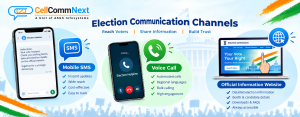
Because the official WhatsApp Business Platform prohibits political campaign use, organizations researching election communication services should evaluate other channels separately and verify that their intended use is permitted.
1. Bulk SMS Services
Bulk SMS can deliver short text messages to mobile numbers through supported messaging infrastructure.
Depending on the use case and applicable requirements, SMS may be used for permitted public information, service notifications, or other authorized communications. Political and election-related SMS must comply with applicable telecom regulations, registration requirements, consent rules where applicable, and election laws.
Learn more about Bulk SMS Services for Elections in Uttar Pradesh.
2. Voice Call Campaign Services
Voice broadcasting delivers recorded audio messages to phone numbers through supported calling infrastructure.
Organizations considering voice communication should confirm the provider’s eligibility requirements, applicable telecom rules, calling restrictions, consent obligations, and election-related requirements before launching a campaign.
3. Official Websites and Public Information Pages
Websites can host detailed announcements, FAQs, downloadable documents, and links to official election resources.
They also allow organizations to update information in one place rather than repeatedly distributing revised messages. Election information should be clearly dated and verified.
4. Public Social Media Communication
Public social media pages may provide a way to publish announcements and respond to general questions, subject to each platform’s policies and applicable law.
Political advertising and election-related content may be subject to additional platform restrictions, authorization requirements, disclosure rules, and election regulations. Organizations should check the current rules of each platform before publishing.
Bulk SMS and WhatsApp Services for Political Campaigns: What Should Organizations Know?
The phrase “Bulk SMS and WhatsApp services for political campaigns” is often used when researching digital election communication. However, the two channels do not necessarily have the same eligibility rules.
WhatsApp’s prohibition on political campaign use through its Business Platform means that a provider cannot make that use permissible simply by offering an API integration, chatbot, CRM connection, or automation package.
SMS is a separate communication channel with its own regulatory framework. Its availability for a particular political communication depends on the applicable telecom requirements, registrations, permissions, and election rules.
Organizations should therefore evaluate each service independently rather than assuming that a combined package automatically authorizes every channel.
For additional information about permitted election-related SMS use cases, see Bulk SMS Provider for Political Parties in UP.
How to Evaluate an Election Communication Service Provider
Before selecting a provider for an election-related communication project, review the following factors.
1. Platform Eligibility
Ask the provider to identify the channel being offered and confirm that the proposed use is permitted by the platform. Do not rely solely on sales claims.
2. Regulatory Compliance
Check applicable telecom requirements, sender registration, message classification, consent and opt-out requirements, and election-related restrictions.
For SMS services in India, review the applicable requirements of the Telecom Regulatory Authority of India (TRAI) and the relevant telecom operator or access provider.
3. Message Accuracy
Establish a review process to verify dates, locations, official instructions, and other factual information before sending it.
4. Data Security
Ask how contact information is stored, who can access it, how long it is retained, and how deletion requests are handled.
5. Delivery Reporting
For eligible communication channels, assess whether the service provides suitable delivery reports and operational records.
6. Customer Support
Check whether technical support is available for integration issues, delivery failures, and compliance questions.
A responsible provider should explain both the capabilities and the limitations of its services.
Election Communication Rules and Compliance in India

Election-related communication in India may be governed by several overlapping requirements, depending on the message, sender, channel, and timing.
Important considerations include:
- WhatsApp policies: Follow the latest Business Messaging Policy and restrictions on political use.
- Election Commission requirements: Review applicable directions on social media, campaigning, and the Model Code of Conduct.
- Telecom regulations: Follow relevant requirements for commercial communications, sender registration, message templates, and consent where applicable.
- Privacy requirements: Protect personal information and avoid unauthorized data use.
- Content accuracy: Do not circulate fabricated claims, misleading election information, or manipulated media presented as genuine.
- Election-period restrictions: Check applicable campaign silence-period rules and other requirements announced by the competent authorities.
The Election Commission of India has previously issued directions emphasizing responsible and ethical social media use by political parties and their representatives. Its current instructions should be checked before every election-related activity.
How CellCommNext’s Election Communication Resources Can Help
CellCommNext publishes information about communication technologies and election-related messaging services. Readers researching these topics can explore the company’s resources to understand different communication channels and their requirements.
Relevant resources include:
These resources should be read alongside the current policies of each platform and the applicable regulatory requirements. In particular, information about the WhatsApp Business API must not be interpreted as confirmation that political campaign use is permitted.
Conclusion
Interest in the WhatsApp Business API for the UP Election 2027 highlights the growing importance of digital communication and reliable public information. However, understanding platform restrictions is essential before selecting a service.
WhatsApp’s current Business Messaging Policy prohibits political parties, candidates, politicians, and political campaigns from using the WhatsApp Business Platform. Organizations should therefore avoid planning election campaigns around WhatsApp Business API access unless the official policy changes.
For organizations exploring election communication options in Uttar Pradesh, CellCommNext provides resources on bulk SMS services and voice call campaigns.
For election-related communication in Uttar Pradesh, the priorities should be accurate information, appropriate channel selection, data protection, and compliance with platform rules, telecom regulations, and Election Commission requirements.
Frequently Asked Questions
Can political parties use the WhatsApp Business API for the UP Election 2027?
No. WhatsApp's current Business Messaging Policy prohibits political parties, politicians, candidates, and political campaigns from using the WhatsApp Business Platform. Check the official policy for any subsequent changes.
What is WhatsApp Business API used for?
For eligible organizations, it supports integrated messaging, approved message templates, customer service automation, and software integrations. It cannot be used to bypass restrictions on prohibited use cases.
Is WhatsApp automation allowed for election campaigns?
Automation does not remove the underlying platform restrictions. Political campaigns cannot use the WhatsApp Business Platform under the current policy. Other WhatsApp features and services should also be checked against the applicable terms before use.
Can bulk SMS be used for election-related communication in Uttar Pradesh?
Potentially, depending on the specific message, sender, and use case. Organizations must follow applicable telecom regulations, registration and consent requirements, and election laws.
What alternatives should organizations evaluate for election communication?
Depending on eligibility and the intended purpose, organizations may evaluate compliant SMS, permitted voice communication, official websites, and public social media channels. Each channel has separate requirements.
Why is compliance important for election messaging?
Compliance helps protect privacy, reduce misleading communication, respect platform rules, and support accurate public information. Violations may lead to regulatory action, message restrictions, or account enforcement.