
Voice channels that are consistent and identifiable have become crucial for businesses in India to provide customer support, service updates, transactional voice calls, and customer care. The 1600 numbering series is a special numbering series for service and transactional voice calls so that eligible businesses can access a special numbering series rather than using regular 10-digit numbers.
This special numbering series is especially useful for regulated sectors such as banking, finance, insurance, and government organizations. The DoT provided the 1600 numbering series for service and transactional voice calls, while TRAI issued the directions for this purpose to the concerned organizations.
If you are looking for a toll-free number provider in Delhi, you should be aware of the difference between 1600 numbers and 1800 numbers. This is because a 1600 number is used to identify a service/transactional call, while a 1800 number is usually a toll-free customer call.
What Is a 1600 Number?
A 1600 number is a dedicated telephone numbering series used for service and transactional voice calls in India. Instead of making such calls from a conventional 10-digit mobile or landline number, eligible organizations can use numbers beginning with the 1600 series.
The purpose of the 1600 number series is to provide consumers with a recognizable calling identity for service and transaction-related communications. TRAI has explained that the separate numbering series helps consumers identify service and transactional calls and can help reduce the risk of promotional calls being presented as service calls.
For organizations operating in regulated sectors, a 1600 number can therefore become an important part of their customer communication infrastructure.
How Does a 1600 Number Work?
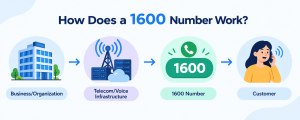
A 1600 number works as a dedicated service or transactional calling identity connected to an organization’s voice communication infrastructure.
A typical communication flow can work like this:
Business/Organization → Telecom/Voice Infrastructure → 1600 Number → Customer
If a qualifying entity places a call regarding services or transactions, then the 1600 series number may be presented to the customer rather than a regular 10-digit number.
The organization can use the number with suitable voice infrastructure, call routing, agent systems, IVR, SIP/PRI, or other supported enterprise communication technologies, depending on the implementation.
The objective is to create a recognizable and regulated calling identity while maintaining proper control over service-related communications.
Is a 1600 Number a Toll-Free Number?
No. A 1600 number cannot be considered equivalent to an 1800 toll-free number.
While the 1600 number series is mostly used for service and transactional voice, the 1800 number series is used for providing toll-free customer calling services.
This point needs to be kept in mind by companies looking for a toll-free number in Delhi or a 1800 toll-free number service in Delhi-NCR.
If your major need is that your customers can connect to your company through a toll-free customer care number, then 1800 service will be a better option.
If your requirement is an identifiable number for eligible service and transactional voice calls, the 1600 series may be relevant.
For broader toll-free communication requirements, businesses can explore a dedicated toll-free number service provider in India.
Why Do Businesses Need a 1600 Number?
Customers receive many calls every day, and it can be difficult to tell whether a call is genuinely from a bank, insurer, government organization, or another service provider.
A dedicated 1600 number calling solution provides a recognizable numbering identity for service and transactional communication.
For eligible organizations, the key reasons for using the series include:
- Identifiable service and transactional calling
- A dedicated business communication identity
- Better customer recognition
- Structured voice communication
- Support for regulated communication requirements
- Reduced dependence on ordinary 10-digit numbers for applicable calls
- Better separation between service calls and promotional calls
TRAI has specifically linked the 1600 series with improving consumer awareness and reducing misuse of ordinary numbers for service or transactional calls.
Key Features of a 1600 Number
Easy Customer Access
A recognizable calling number makes it easier for customers to understand that a call may be related to an existing service or transaction.
For organizations that frequently communicate with customers, recognizable caller identification can support better communication practices.
Professional Business Communication
Using a dedicated 1600 number series for voice calls gives eligible organizations a structured identity for service and transactional communications.
It can integrate into an organization’s broader customer communication strategy, along with IVR, call routing, contact-center systems, and customer support infrastructure.
Call Routing and Management
Depending on the underlying voice platform, incoming or related customer communication can be routed to the appropriate department, team, branch, or support agent.
Businesses can design routing rules according to departments, locations, business hours, or customer requirements.
Multiple Call Handling
Organizations handling large customer volumes need systems capable of managing multiple calls efficiently.
A suitable enterprise voice setup can support multiple agents, departments, queues, and call-handling processes.
Better Customer Support
Voice Communication Systems Can Be Used to Provide Better Customer Experience Consistency for Organizations.
For instance, a customer may reach out to the support team and pick up an option via IVR before being directed to the appropriate department.
Benefits of Using a 1600 Number for Businesses
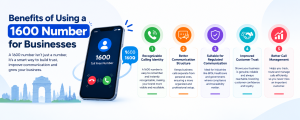
A 1600 number series can provide several communication benefits when used for the appropriate purpose and by eligible organizations.
1. Recognizable Calling Identity
Customers can distinguish service and transactional calls from ordinary calls more easily.
2. Better Communication Structure
Organizations can connect the number with their customer care and enterprise voice infrastructure.
3. Suitable for Regulated Communication
The series is particularly important for organizations covered by applicable regulatory requirements. TRAI has issued directions concerning adoption by RBI-, SEBI-, PFRDA-, and IRDAI-regulated entities.
4. Improved Customer Trust
A recognizable service-call identity can make communication easier for customers to understand, although organizations should still follow all applicable authentication, disclosure, and communication requirements.
5. Better Call Management
Organizations can combine numbering with IVR, routing, queues, agent systems, and other enterprise voice technologies.
Who Can Use a 1600 Number?
The eligibility and applicable requirements depend on the current regulatory framework and the type of organization.
The 1600 series was allocated for service and transactional voice calls, with DoT initially providing the series for government and BFSI entities. TRAI subsequently issued directions concerning mandatory adoption for relevant regulated entities.
For example, organizations in the following areas may have requirements around the 1600 series:
- Banking
- Financial services
- Insurance
- Government services
- Regulated financial organizations
- Other entities covered by applicable numbering directions
Businesses should confirm their eligibility and current regulatory requirements with their telecom service provider before applying.
Common Business Uses of 1600 Numbers

Customer Care and Support
Banks, financial institutions, insurance companies, and eligible organizations can use service-call numbering to communicate with customers regarding existing services and transactions.
Banking and Financial Services
The 1600 Number Series for Banks & Fintechs is especially relevant because the regulatory framework has focused on service and transactional calls in the BFSI sector.
Potential use cases include:
- Account-related communication
- Transaction-related calls
- Service updates
- Customer support
- Banking assistance
- Financial service communication
TRAI has issued directions for phased adoption of the 1600 series by entities regulated by RBI, SEBI, and PFRDA.
Insurance Companies
Insurance organizations can use the applicable 1600-series framework for service and transactional communication. TRAI has separately issued directions concerning mandatory adoption by IRDAI-regulated entities.
Healthcare Services
Healthcare organizations may use enterprise voice systems for appointment communication, customer support, service updates, and other permitted communications. However, whether a specific organization can use the 1600 series depends on applicable regulatory eligibility.
E-commerce and Retail
Businesses in e-commerce and retail may need different voice-numbering solutions depending on the purpose of their calls and applicable regulations. Organizations should not assume that every commercial calling activity qualifies for the 1600 series.
Government and Public Services
Government organizations are an important use case for service and transactional voice communications. The 1600 numbering framework was specifically allocated for government and BFSI entities in the initial DoT framework.
1600 Number vs Toll-Free Number: What Is the Difference?
These two terms have been used synonymously on the internet for search purposes; however, these are two entirely distinct terminologies.
| Feature | 1600 Number | 1800 Toll-Free Number |
| Primary purpose | Service and transactional voice calls | Customer inbound calling |
| Numbering identity | 1600 series | 1800 series |
| Same as toll-free? | No | Yes, generally. |
| Main use | Service/transaction-related communication | Customer care and business inquiries |
| Eligibility | Depends on applicable regulations | Depends on provider/service |
| Caller charges | Should not be assumed to be free | Designed for toll-free calling |
| Common use | BFSI and government service calls | Customer support and business helplines |
Therefore, if someone searches for a toll-free number service provider in Delhi, they should first determine whether they actually require an 1800 toll-free service or a 1600 service/transactional calling solution.
1600 Number vs Regular Business Number
A regular business number is a conventional telephone number used for general business communication.
A 1600 number, on the other hand, belongs to a dedicated numbering series intended for service and transactional voice calls.
| Feature | 1600 Number | Regular Business Number |
| Number series | 1600 | Standard numbering |
| Intended use | Service and transactional calls | General business communication |
| Regulatory framework | Specific requirements may apply. | General telecom requirements |
| Caller identification | Dedicated service identity | Standard business identity |
| Best suited for | Eligible organizations | General businesses |
The choice depends on the purpose of communication, organizational eligibility, and telecom requirements.
How to Get a 1600 Number for Your Business in India?
Businesses should first determine whether they are eligible for a 1600-series number under the current regulatory framework.
A typical process may include:
- Identify the purpose of your voice communication.
- Confirm whether your organization is eligible.
- Select an authorized telecom or communication service provider.
- Submit the required business and KYC documents.
- Complete the applicable verification process.
- Configure the number with the required voice infrastructure.
- Set up call routing, IVR, agents, or other communication systems.
- Test the calling setup before production use.
However, there is some variation based on the firm and telecommunications service providers that need to be considered.
Documents Required for a 1600 Number
The required documents can vary depending on the applicant and provider.
Commonly requested business documentation may include:
- Company incorporation or registration documents
- PAN details
- GST certificate, where applicable
- Authorized signatory information
- Business address proof
- Organization KYC documents
- Identity and address proof of authorized representatives
- Telecom/service-provider application forms
- Sector-specific authorization or regulatory documentation, where required
Organizations should confirm the latest documentation requirements with their selected provider before submitting an application.
How Much Does a 1600 Number Cost?
The cost of a 1600 number depends on several factors, including telecom operator charges, service-provider charges, number allocation, voice infrastructure, call routing, usage, SIP/PRI requirements, IVR, and other enterprise communication features.
Therefore, there is no single universal price that applies to every business.
Before purchasing a service, ask the provider for a complete pricing structure covering:
- Number allocation/setup
- Monthly rental
- Incoming/outgoing calling charges, where applicable
- IVR charges
- Call-routing charges
- SIP/PRI or other connectivity charges
- Additional user/agent charges
- Maintenance or platform fees
A transparent quotation helps businesses understand the total communication cost before implementation.
Businesses that want to provide an alternative response mechanism can also consider a missed call service provider in India.
Factors to Consider Before Choosing a 1600 Number Service Provider
Choosing a suitable provider involves more than selecting a number. Consider the complete voice communication infrastructure.
Regulatory Compliance
Confirm that the provider understands the applicable DoT and TRAI requirements for 1600-series service and transactional calls.
Telecom Connectivity
Check which telecom infrastructure and connectivity options are supported.
Call Quality
Reliable voice quality is essential for customer communication.
Scalability
The solution should be capable of supporting your expected call volume and future business growth.
IVR and Call Routing
If your organization needs automated menus and departmental routing, check whether IVR and routing capabilities are available.
Reporting and Monitoring
Call reports and monitoring can help organizations track communication performance.
Technical Support
Ask about technical support, escalation processes, and service availability.
Integration
It is most probable that your company will have to integrate with CRMs, call centers, SIP, IVR, or any other kind of communication system.
In case your business requires a more extended toll-free service as compared to the 1600 number service, then you may also consider looking at a toll-free number service provider in India.
How a 1600 Number Improves Customer Experience
Customer experience is strongly influenced by how easily people recognize and interact with a business.
A dedicated service and transactional calling identity can make communication more structured. Customers may find it easier to identify a service-related call when the organization uses the appropriate dedicated numbering series.
A complete customer communication setup can combine 1600-number calling with:
- IVR
- Call routing
- Customer support agents
- CRM integration
- Call recording
- Call reporting
- Voice broadcasting where permitted
- Missed-call solutions
- Virtual receptionist services
For organizations that need an automated front-desk communication system, a virtual receptionist service provider in India can help build a structured call-handling setup.
How Can CellCommNext Help with Business Communication?
CellCommNext provides business communication solutions designed to help organizations manage customer interactions through voice and other communication channels.
Businesses can use communication technologies such as IVR, voice calling, missed-call solutions, virtual receptionist services, toll-free numbers, and related enterprise communication tools according to their requirements.
For organizations specifically looking for a toll-free number service provider in Delhi, it is important to first identify whether the requirement is an 1800 toll-free customer-care number or a 1600-series service and transactional calling solution.
CellCommNext can help businesses understand the available communication options and select a setup according to their business requirements, calling purpose, and applicable telecom requirements.
For permitted voice communication campaigns, organizations can explore a bulk voice call service provider in India based on their communication purpose and applicable regulations.
Conclusion
The 1600 number series is an important development in India’s business voice communication ecosystem. Unlike an ordinary business number or an 1800 toll-free number, it is specifically associated with service and transactional voice calls.
For banks, financial institutions, insurance companies, government organizations, and other entities covered by the applicable framework, understanding 1600-number calling solutions can help create a more recognizable and structured customer communication system.
If your requirement is customer support through an inbound toll-free number, you may need an 1800 solution instead. If your requirement relates to regulated service and transactional voice communication, a 1600-series solution may be relevant, subject to eligibility and current telecom requirements.
Businesses should always confirm the latest DoT/TRAI requirements, eligibility, documentation, and commercial terms before implementing a 1600 number solution.
CellCommNext can help businesses explore suitable voice communication solutions, including toll-free numbers, IVR, missed call services, virtual receptionist solutions, and voice communication services. Whether you need a dedicated customer communication system or want to improve your existing business calling infrastructure, CellCommNext can help you identify a solution based on your business requirements and communication needs.