
Election campaigns require effective communication to reach voters with timely and relevant messages. While political campaigns use multiple digital channels, voice broadcasting provides a direct way to deliver a recorded message to a large number of people through phone calls.
In 2027, Voice Call Campaigns for Elections can be used for campaign announcements, candidate introductions, event reminders, voter outreach, and other communication activities. Instead of depending only on text messages, campaign teams can use a recorded voice message to communicate information in a more conversational format.
From local constituencies to larger political campaigns, Voice Call for Election can support organized voter communication when planned and operated according to applicable laws and platform requirements.
What Are Voice Call Campaigns for Elections?
Voice Call Campaigns for Elections use automated voice broadcasting technology to deliver a pre-recorded message to a list of phone numbers. The campaign team creates a voice message, uploads it to a voice broadcasting platform, selects the intended audience, and schedules the calls.
When the campaign starts, the system automatically places calls to the select numbers and plays the record message when the call is answer.
A typical election voice campaign may include:
- Candidate introduction messages
- Election-related announcements
- Public meeting or event reminders
- Campaign schedule updates
- Voter awareness messages
- Polling-day information, where permitted
- Follow-up communication
- Constituency-level announcements
This approach can reduce the need for campaign representatives to manually call every person individually.
For campaigns looking for broader communication solutions, a Bulk Voice Call Service for Election Campaign can be used as one component of a larger communication strategy.
Why Voice Broadcasting Is Becoming Important in 2027
Election communication is becoming increasingly multi-channel. Campaign teams may use SMS, WhatsApp, social media, email, websites, and voice communication depending on their audience and campaign requirements.
Voice broadcasting offers a different communication format because the recipient can hear the message instead of reading it.
One important advantage is accessibility. A short and clearly record voice message for election can communicate information without requiring recipients to read a long message.
Voice broadcasting can also help campaign teams communicate the same approve message consistently across a large audience.
Other potential benefits include:
- Fast distribution of campaign messages
- Consistent communication
- Automated calling
- Scheduled campaigns
- Regional-language communication
- Campaign tracking and reporting
- Reduced manual calling requirements
However, campaign teams should always consider consent, applicable election rules, telecom regulations, and other legal requirements before sending political communication.
How Do Voice Call Campaigns for Elections Work?

The process of running an election voice campaign is generally straightforward.
1. Prepare the Contact List
The campaign team first prepares the phone-number database that it is legally permitted to use for communication.
The database can be organized according to campaign requirements, such as constituency, area, language preference, or communication segment.
2. Record the Voice Message
A short and clear voice message is recorded for the campaign.
The message should communicate one primary purpose rather than trying to include too much information in a single call.
For example, a campaign may create separate messages for an event reminder, candidate introduction, or general campaign announcement.
3. Upload the Recording
The recording is upload to the select voice broadcasting platform.
The service provider may support different audio formats, campaign scheduling options, call controls, and reporting features.
4. Select the Campaign Audience
The campaign team selects the approve contact list and determines which audience should receive the message.
For large campaigns, different lists can be used for different locations or campaign activities.
5. Schedule the Calls
The campaign can then be schedule according to its communication plan and applicable calling restrictions.
6. Monitor Campaign Results
Depending on the platform, campaign teams may receive reports about call attempts, answer calls, unsuccessful calls, and other available campaign metrics.
This information can help campaign teams understand campaign delivery and manage future communication.
CellCommNext provides voice broadcasting solutions that can help organizations manage automated voice communication campaigns.
Read More: What Is a 1600 Number?
Benefits of Voice Broadcasting for Election Campaigns
Voice broadcasting can provide several practical benefits when used responsibly.
Reach a Large Audience
Manual calling can require significant time and human resources. Automated Election Voice Call Services can help distribute a pre-recorded message to a large approved contact list.
Deliver a Consistent Message
Every recipient can hear the same recorded message. This helps campaign teams maintain consistency in campaign announcements and information.
Support Multiple Languages
India has a diverse linguistic audience. Campaign teams can prepare different recordings in relevant regional languages where appropriate.
For example, separate recordings can be prepared for Hindi, English, or other regional-language audiences.
Save Time on Repetitive Communication
Automated calling can handle repetitive communication tasks, allowing campaign staff to focus on other campaign activities.
Useful for Event Reminders
Voice calls can be used to communicate reminders about permitted campaign meetings, public events, announcements, or other scheduled activities.
Easy-to-Understand Communication
A voice message can be useful when the campaign wants to communicate information conversationally rather than relying entirely on written text.
For campaigns operating in Delhi, a relevant option can also be researched through Bulk Voice Call Service Providers in Delhi.
Voice Message for Election: Key Use Cases
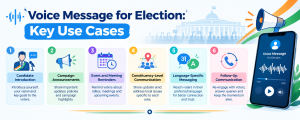
A Voice Message for Election can be designed for different campaign communication requirements.
Candidate Introduction
A short recorded message can introduce a candidate and communicate basic campaign information.
Campaign Announcements
Campaign teams can distribute important announcements to an approved audience through recorded calls.
Event and Meeting Reminders
Voice calls can be used to remind recipients about upcoming campaign events, subject to applicable rules and permissions.
Constituency-Level Communication
Different areas may require different messages. Campaign teams can prepare location-specific recordings for relevant audiences.
Language-Specific Messaging
Campaign teams can create different voice recordings based on the language requirements of their target audience.
Follow-Up Communication
Where permitted, voice calls can be incorporated into a broader communication workflow to follow up on previous campaign interactions.
The exact use of voice communication should depend on applicable election laws, telecom requirements, consent requirements, and campaign guidelines.
Voice Call Services for Election Campaigns
Voice call services for elections are generally offered through platforms that provide automated calling and voice broadcasting technology.
When evaluating a voice communication platform, campaign teams can consider features such as
- Bulk voice calling
- Automated call scheduling
- Recorded voice messages
- Multiple language support
- Contact-list management
- Call reporting
- Campaign monitoring
- API integration
- Call retry options
- Customer support
A Bulk Voice Call Service Provider in India can provide voice broadcasting infrastructure for organizations that need automated communication at scale.
The right technical setup depends on campaign size, communication requirements, audience segmentation, recording language, and compliance requirements.
Best Practices for Election Voice Campaigns
A successful voice campaign is not only about making a large number of calls. The quality, timing, relevance, and compliance of the communication also matter.
Keep the Message Short
A voice message should communicate the main point quickly. Long recordings can make it harder for recipients to stay engaged.
Use Clear Language
Avoid complicate terminology. Use simple language that the intended audience can easily understand.
Choose the Appropriate Language
Where appropriate, use the language that is commonly understood by the intende audience.
Use a Clear Voice Recording
The recording should have good audio quality and a natural speaking pace. Background noise should be minimize.
Segment the Audience
Instead of sending the same message to every contact, campaign teams can organize approve contact lists base on relevant campaign requirements.
Schedule Carefully
Calls should be schedule at appropriate times and within applicable telecom and election-relate restrictions.
Track Campaign Delivery
Available reporting can help campaign teams identify delivery issues and improve future communication campaigns.
Follow Applicable Rules
Political communication is subject to legal and regulatory requirements. Campaign teams should verify the current rules before launching a campaign.
Compliance Considerations for Political Voice Calls
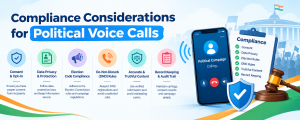
Compliance should be an important part of every political voice campaign.
Before launching election bulk voice call campaigns, organizations should verify the current requirements that apply to political communication, telecommunications, privacy, consent, and election campaigning.
Campaign teams should maintain appropriate records of their communication lists and ensure that they have the required permissions or lawful basis for contacting recipients.
They should also check applicable restrictions on campaign communication, calling times, automated calls, and election-period communication.
Because regulations can change and requirements can vary depending on the communication method and election context, campaign organizations should obtain appropriate legal or regulatory guidance before starting a large-scale campaign.
Also Read this: Bulk Voice Call Service Providers in Delhi.
Conclusion
Voice Call Campaigns for Elections can provide campaign teams with a scalable way to distribute recorded messages through phone calls. With features such as automated calling, scheduled campaigns, audience segmentation, multilingual recordings, and reporting, voice broadcasting can form part of a broader election communication strategy.
At the same time, effective election communication requires more than technology. Campaign teams should use clear messages, appropriate audience segmentation, responsible communication practices, and compliance checks.
For organizations evaluating voice call service for election requirements, it can be useful to compare available features and choose a communication setup that matches the campaign’s audience, scale, and operational needs.
CellCommNext provides communication solutions, including bulk voice broadcasting, helping organizations explore scalable voice communication for their campaign requirements.
For additional voice communication resources, explore the Top 10 Bulk Voice Call Service Providers in Delhi.
Frequently Asked Questions
What are voice call campaigns for elections?
Voice call campaigns for elections use automated voice technology to deliver prerecorded messages to an approved list of phone numbers. They can be used for campaign announcements, event reminders, candidate communication, and other permitted election-related communication.
What is a Voice Message for an election?
A Voice Message for an election is a recorded audio message delivered through a phone call. It can be created for different campaign communication purposes, such as announcements, introductions, reminders, or public information.
What are voice call services for election campaigns?
Voice call services for election campaigns provide technology for automated voice broadcasting. Depending on the provider, features can include bulk calling, scheduling, recording management, reporting, and campaign monitoring.
Can bulk voice calls be used for election campaigns?
Bulk voice calls may be used for permitted campaign communication, but campaign teams must comply with applicable election, telecom, privacy, consent, and communication regulations before launching a campaign.
How can I choose a bulk voice call service for election campaigns?
Consider factors such as calling capacity, recording quality, language support, scheduling, reporting, technical support, integration options, pricing, and compliance requirements before selecting a service.