
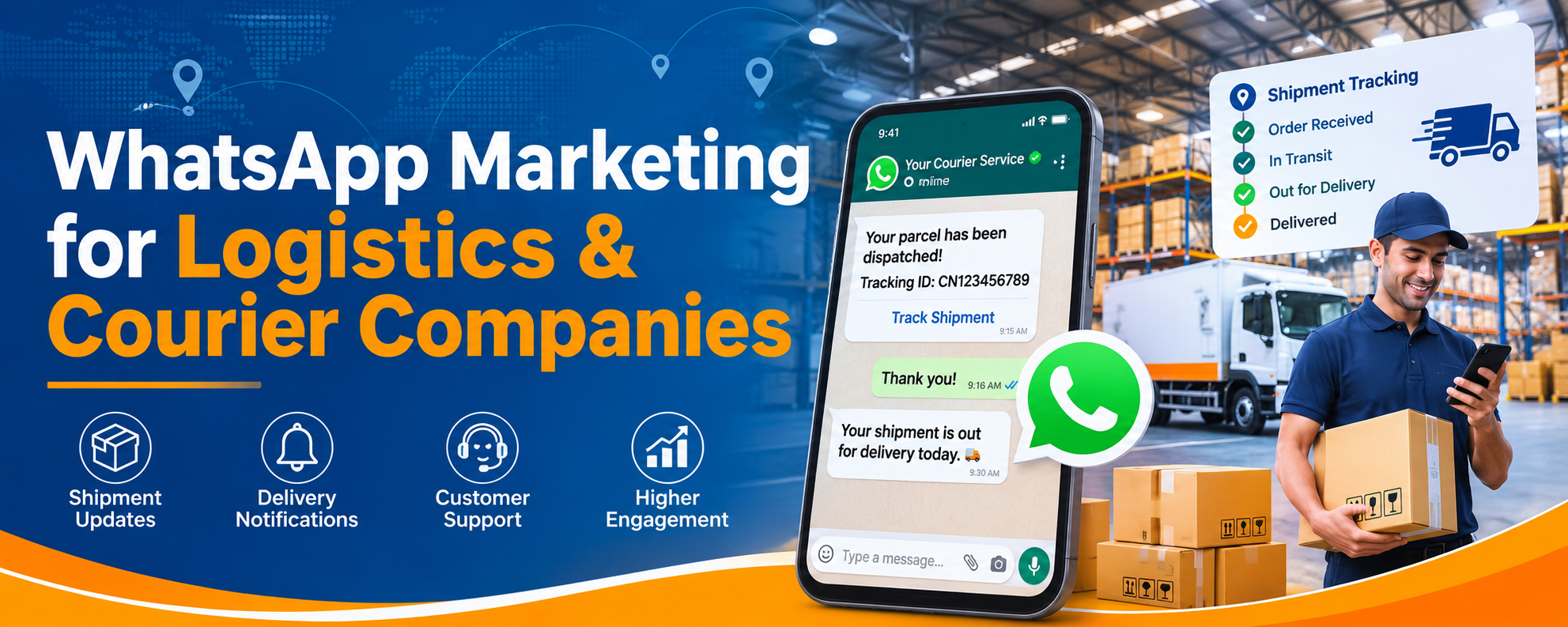
Logistics and courier services depend on punctuality, proper shipment information, and proper customer communication. Customers are required to be informed about the whereabouts of their consignment, when it will be delivered, and how they can get in contact with delivery assistance.
Conventional means of communication, like phone calls and SMS, make it challenging for the logistics companies to handle a huge number of customer queries and notifications.
In comes WhatsApp marketing for logistics. The WhatsApp Business API enables logistics and courier companies to send out shipment notifications, delivery notifications, booking confirmations, and customer service messages to customers.
Companies may also make use of WhatsApp to create new leads, interact with e-commerce vendors, and build better customer relations.
Here is where we will take you through 10 powerful WhatsApp marketing tactics for logistics and courier services, along with the benefits, how to execute them, and how to enhance customer communications.
What Is WhatsApp Marketing for Logistics & Courier Companies?
Marketing using WhatsApp for Logistics entails making use of several different features from WhatsApp Business and WhatsApp Business API to interact with customers, provide shipment information, send notifications regarding deliveries, and handle customer queries.
Logistics companies, couriers, transport, and delivery services of e-commerce can make their work easier through the utilization of WhatsApp to communicate during the entire process of the delivery.
For instance, once the client requests the service of the courier, the company can make a notification via WhatsApp. Later, once the package is shipped, customers can get automatic notifications.
Some of the common uses are
- Shipment tracking notifications
- Courier booking confirmations
- Pickup and delivery notifications
- Parcel dispatch notifications
- Delivery failure notifications
- Customer care messages
- Feedback and review notifications
- WhatsApp marketing campaigns
With the assistance of a good WhatsApp marketing services company in India, logistics companies will be able to handle customer communications effectively.
Why Do Logistics Companies Need WhatsApp Marketing?
Effective communication with customers is key in logistics services. Customers are always in touch with courier firms asking questions regarding the location of their parcels or delivery dates.
Handling such queries manually could prove costly and time-consuming.
Marketing on WhatsApp is extremely important for businesses because it aids in communication by automating messaging and customer interactions.
Here are some significant reasons why logistics firms need to use WhatsApp marketing:
Rapid Communication with Customers
Shipment details can be conveyed to customers instantly using WhatsApp.
Real-time Parcel Status
The customer gets updates on the dispatch, movement, and efforts for delivery.
Decreased Manual Efforts
Notifications help reduce customer queries and manual communications.
Enhanced Customer Service
Customers get all the necessary details regarding the shipments without approaching customer service again and again.
Increased Business Networking
It is an effective medium to communicate with current customers, e-commerce sellers, and future business partners.
10 Effective WhatsApp Marketing Strategies for Logistics & Courier Businesses
Here are 10 practical strategies that logistics and courier companies can implement using the WhatsApp Business API.
1. Send Automated Shipment Tracking Updates
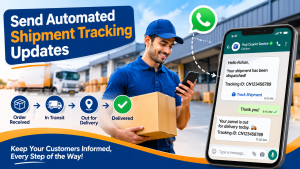
Often, the customer may wish to track his parcel and the delivery time.
The logistics company can automate their WhatsApp to notify the customers about their shipment at various levels.
Such as:
- Order received
- Shipment picked up
- Shipment dispatched
- Shipment on the way
- Out for delivery
- Shipment successfully delivered
Example of WhatsApp message:
Hi {{Customer Name}}, your shipment has been successfully dispatched! Tracking ID: {{Tracking ID}}. You can track your shipment through the tracking link provided below. Thank you for choosing us for your courier service.
2. Send Pickup and Delivery Notifications
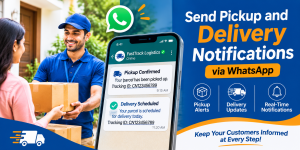
Notices via WhatsApp may assist customers in preparing for their parcel pickup and delivery.
The courier company may send a notice regarding the pickup of the parcel and another regarding its delivery.
Sample Notice:
Dear {{Customer Name}},
Your parcel is due for delivery today.
Tracking ID: {{Tracking ID}}
Kindly ensure that someone will be present to accept your parcel.
Thank You!
3. Automate Courier Booking Confirmations

WhatsApp may help the couriers acknowledge the request as well as provide important information related to the booking process.
After filling in the booking form by a customer, a WhatsApp message can be sent to inform him about:
- Confirmation of booking
- Address for pick-up
- Parcel details
- Reference number of booking
- Pick-up date expected
4. Provide Automated Customer Support

The customer may have queries regarding the delay in the shipment, lost shipments, tracking codes, and courier costs.
WhatsApp Business API can assist in handling such common queries through automation and bots.
For instance, the customer will have options to choose from, such as:
- Track My Shipment
- Book a Courier
- Delivery Status
- Customer Care
- Delivery Issues
For more ideas, explore our guide on How to Automate WhatsApp Messages for Leads, Orders and Customer Support.
5. Send Failed Delivery Notifications
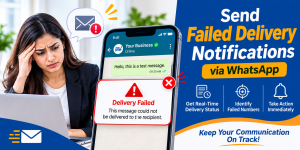
Unsuccessful deliveries pose some issues to courier firms and clients.
In cases where a delivery has not been successful, businesses can opt to use WhatsApp notifications to inform customers about the issue and ask for confirmation of availability for the next delivery attempt.
Example Notification Message:
Hi {{Client’s Name}},
We tried delivering your package; however, the delivery was unsuccessful.
Please confirm your availability for the next delivery attempt.
Tracking Number: {{Tracking Number}}
6. Use WhatsApp for Delivery Confirmation

After the delivery of the cargo, courier services can send out a confirmation message to the client.
The message will contain details of when the delivery was made, tracking code, and a choice for getting help in case the package has not arrived.
Organizations can also solicit comments regarding their delivery service.
This will allow companies to keep track of deliveries and customer satisfaction.
7. Run WhatsApp Marketing Campaigns

WhatsApp Marketing does not only involve shipment updates; logistics firms can also engage in promotions to acquire more clients and partners.
For instance, couriers can market to:
- E-commerce companies
- Online sellers
- Manufacturers
- Wholesale dealers
- Small and medium-sized businesses
Firms can promote information on their services, introduce new services to clients, or give out promotions to people who are interested in receiving such communications.
A professional bulk WhatsApp marketing service provider in India can assist you in managing your WhatsApp marketing campaign.
8. Collect Customer Feedback and Reviews

Customer feedback enables logistics companies to know their level of service performance.
When the delivery is completed successfully, they can ask customers for feedback through WhatsApp.
Feedback Request Email Sample
{{Customer Name}}, your parcel has been successfully delivered to you. Could you please share your opinions about our delivery services?
Excellent, good, average, poor. Thanks for your opinion!
9. Generate Leads Through Click-to-WhatsApp Campaigns

Logistics firms have to generate a steady supply of customers in order to expand their businesses.
Click-to-WhatsApp ads help potential customers initiate a conversation with the business over WhatsApp.
Businesses can leverage this advertising strategy for reaching out to:
- E-commerce merchants
- Online shopping firms
- Exporters/importers
- Manufacturers
- Retail firms
- Small business owners
The customer can ask questions regarding logistics services such as couriers, bulk shipments, and business collaborations after clicking on the ad.
10. Send Repeat Booking Reminders

Firms that ship packages on a regular basis may require courier services many times a month.
A logistics company can leverage WhatsApp to reach out to their current clients and send reminders about services offered.
For instance, an e-commerce seller that usually delivers items could get notifications regarding arranging courier services.
Such notifications must be pertinent and should only be sent to customers who have subscribed to them.
WhatsApp Business API vs WhatsApp Business App for Logistics
Both the WhatsApp Business App and the WhatsApp Business API can support business communication. However, their capabilities are different.
| Features | WhatsApp Business App | WhatsApp Business API |
| Customer messaging | Yes | Yes |
| Automated notifications | Basic | Advanced integrations |
| Shipment updates | Manual or basic automation | Automated workflows |
| Chatbot integration | Limited | Supported |
| CRM integration | Limited | Supported |
| Multiple-agent support | Limited | Supported through platforms |
| Large-scale communication | Limited | Designed for scalable communication |
For logistics and courier companies managing a high volume of shipments, WhatsApp Business API can provide more advanced automation and integration capabilities.
Learn more about WhatsApp Business API and how it can support business communication.
Benefits of WhatsApp Automation for Courier Companies
WhatsApp automation can help logistics companies improve communication and simplify repetitive business activities.
Some important benefits include:
Automated Notifications: Send shipment confirmations, dispatch updates, and delivery alerts automatically.
Better Customer Support: Manage common customer inquiries through automated responses and chatbot workflows.
Time Savings: Reduce repetitive manual communication and allow support teams to focus on complex customer issues.
Improved Customer Engagement: Maintain communication with customers throughout the delivery process.
Business Growth: Connect with new customers, e-commerce sellers, and businesses looking for courier solutions.
Centralized Communication: Manage customer conversations through supported business messaging platforms.
WhatsApp Message Templates for Logistics Businesses
Here are some ready-to-use WhatsApp message examples for courier and logistics companies.
Shipment Confirmation
Hello {{Customer Name}},
Your courier booking has been confirmed successfully.
Booking ID: {{Booking ID}}
Thank you for choosing our services!
Parcel Dispatched
Hello {{Customer Name}},
Your parcel has been dispatched and is now on its way.
Tracking ID: {{Tracking ID}}
Track your shipment: {{Tracking Link}}
Out for Delivery
Hello {{Customer Name}},
Good news! Your parcel is out for delivery today.
Please keep your phone available for delivery coordination.
Delivery Successful
Hello {{Customer Name}},
Your shipment has been delivered successfully.
Thank you for trusting our courier services. We look forward to serving you again!
Delivery Delay
Hello {{Customer Name}},
We regret to inform you that your shipment is experiencing a delivery delay.
Our team is working to complete the delivery as soon as possible.
Tracking ID: {{Tracking ID}}
We appreciate your patience.
Note: Businesses should use approved WhatsApp message templates where required and follow applicable WhatsApp messaging policies.
How to Start WhatsApp Marketing for Your Logistics Business
Using WhatsApp for marketing need not be a difficult process. Here are some steps that logistics businesses can undertake to develop a communication strategy.
Step 1: Determine Your Business Objectives
Think about what you would like to accomplish through WhatsApp marketing. You could want to use it for shipment tracking, customer service, courier bookings, etc.
Step 2: Use WhatsApp Business API
If your business requires automated processes and integration capabilities, you should go for the WhatsApp Business API.
Step 3: Pick a WhatsApp API service provider in India
Select a good WhatsApp Business API service provider in India.
Step 4: Design Message Templates
Create templates for messages relating to booking, shipment, delivery, and support.
Step 5: Integration with the Logistics Platform
Integrate WhatsApp with your CRM, order management, or logistics platform, if any.
Step 6: Begin Messaging with Customers
Message your customers through transactional and marketing messages based on their preferences.
Step 7: Analyze Your Performance
Analyze your performance by delivery, open rate, reply rate, and conversion rate.
What Should You Track for Logistics WhatsApp Campaigns?
Tracking campaign performance helps logistics companies understand whether their WhatsApp communication is effective.
Here are some important metrics to monitor:
| Metric | What It Measures |
| Message Delivery Rate | Percentage of messages successfully delivered |
| Message Read Rate | Percentage of delivered messages read |
| Customer Response Rate | Number of customers responding |
| Click-Through Rate | Customers clicking tracking or service links |
| Booking Conversion Rate | Enquiries converted into courier bookings |
| Customer Satisfaction | Feedback received from customers |
| Support Resolution Time | Time taken to resolve customer enquiries |
Businesses should review these metrics regularly and improve their messaging strategy based on the results.
How Much Does WhatsApp Marketing for Logistics Cost?
The cost of WhatsApp marketing for logistics companies depends on several factors, including the messaging platform, service provider, message category, messaging volume, and integration requirements.
With CellCommNext, you can get started with WhatsApp Business API for free. The Basic Plan starts at ₹999/month.
Some important factors that influence the overall cost include:
- WhatsApp Business API platform charges
- Applicable Meta messaging charges
- Service provider subscription or platform fees
- Chatbot and automation requirements
- CRM and logistics software integration
- Customer support requirements
Before selecting a provider, logistics businesses should understand the pricing structure and compare the features included in each solution.
Read our detailed guide on WhatsApp Business API Pricing in India to understand the different cost components.
Best Practices for Logistics and Courier WhatsApp Messages
To get better results from WhatsApp marketing, logistics companies should follow these best practices:
- Get Customer Consent: Send messages to customers who have provided the required permission to receive WhatsApp communication.
- Share Relevant Updates: Send useful information about bookings, shipments, and deliveries.
- Keep Messages Short: Use simple language that customers can understand quickly.
- Include Tracking Details: Add shipment IDs and tracking links wherever relevant.
- Use Personalization: Include customer names, booking numbers, and delivery information where appropriate.
- Avoid Excessive Messaging: Do not send unnecessary or repetitive messages.
- Provide Customer Support: Make it easy for customers to contact your support team.
- Follow WhatsApp Policies: Use approved templates where required and comply with applicable messaging rules.
How to Choose the Best WhatsApp Business API Provider in India?
Selecting the right vendor that offers WhatsApp Business API services is essential for logistics businesses when it comes to improving customer communication.
The following considerations should be made before choosing a service provider:
- Official WhatsApp Business Platform
- Automated messages feature
- Chatbots and workflow automation
- CRM and Logistics software integration
- Campaign management feature
- Customer Support
- Pricing
- Scalogistics
Moreover, logistics businesses looking for a guide can also refer to our article about the Top 10 WhatsApp API Providers in India.
Compare various service providers in light of the services and features offered rather than selecting any according to price alone.
Why Choose CellCommNext for Your Logistics or Courier Company?
CellCommNext offers business communication solutions that are tailored to help businesses engage customers and handle communication better.
In logistics and courier services, WhatsApp marketing will allow various communication needs to be met through shipment alerts, delivery information, customer queries, and promotions.
CellCommNext allows you to take into account various communication tools such as
WhatsApp Business API: Communication support for businesses using WhatsApp.
Bulk WhatsApp Marketing: Communication with selected clients using marketing campaigns.
Notifications: Create workflows of communication regarding shipment details, booking, and delivery notifications.
Customer Engagement: Improved communication with your customers and business partners.
Bulk SMS Services: Communication with your customers using SMS.
With a WhatsApp Marketing Service Provider in India, CellCommNext is able to assist businesses in finding messaging solutions that suit their communication requirements.
If you run a courier firm, logistics company, transport company, or delivery service for an online store, a suitable messaging solution might just help you make your customer communication simpler.
Do you want to improve your customer communication for your logistics or courier firm? Why don’t you talk to CellCommNext about it today?
Conclusion
WhatsApp marketing is becoming a key form of communication that is being used by logistics and courier firms. Businesses have a way of engaging customers, from automated delivery alerts and updates to support and marketing campaigns. With the WhatsApp Business API, logistics firms can streamline communication and engage their customers better.
The choice of the best WhatsApp marketing platform is also crucial for meeting business communication needs.
At CellCommNext, we provide services like WhatsApp marketing, WhatsApp Business API, Bulk SMS, and other business communication solutions that will help you manage your customer communication needs.
If you wish to manage your communication and customer engagement in the logistics or courier business, take a look at our WhatsApp marketing services.
Frequently Asked Questions
How can WhatsApp marketing help logistics companies?
WhatsApp marketing helps logistics companies send shipment updates, delivery notifications, booking confirmations, and customer support messages. It also helps businesses communicate with customers and generate new inquiries.
Can courier companies send automatic delivery updates on WhatsApp?
Yes. Courier companies can use the WhatsApp Business API and supported integrations to send automated notifications about parcel dispatch, shipment tracking, delivery attempts, and successful deliveries.
Is WhatsApp Business API useful for shipment tracking?
Yes. WhatsApp Business API can be integrated with shipment tracking systems to share relevant tracking updates and delivery notifications with customers.
Can logistics companies automate customer support through WhatsApp?
Yes. Logistics companies can use chatbots, automated replies, and predefined workflows to handle common customer questions about bookings, shipment status, and delivery issues.
How much does WhatsApp Business API cost in India?
The cost depends on applicable Meta messaging charges, platform fees, service provider charges, and integration requirements. Businesses should compare pricing plans based on their messaging needs.
Which is better for courier businesses: WhatsApp Business App or API?
The WhatsApp Business App may be suitable for smaller businesses with basic communication requirements. WhatsApp Business API is generally more suitable for companies requiring advanced automation, integrations, and scalable messaging.